Lockheed Martin Corporation
Bethesda, MD · Founded 1995
The largest defense contractor in the world by federal contract dollars. Products span the F-35 Joint Strike Fighter, Sikorsky helicopters, missile defense systems, satellites, the Trident submarine-launched ballistic missile, and the Orion crew capsule for NASA. Has been the top recipient of U.S. Department of Defense prime contracts every year for the past decade.
FY26 estimated federal contracts
$62B
Illustrative — based on prior-year procurement patterns; will be updated with verified USAspending data as FY26 obligations finalize.
Federal contracts by fiscal year
Federal awards trend
Source: Hand-curated estimate based on prior-year procurement patterns and public 10-K filings. USAspending fragments this recipient across multiple parent registrations, preventing reliable automated rollup.
* Illustrative estimate; awaiting USAspending finalization for this fiscal year.
Where the money comes from
Top funding agencies
Federal lobbying spend
Lobbying disclosures
Contract-to-lobby ratio: 4,100× — for every $1 spent on federal lobbying in 2025, this recipient received approximately 4,100× in federal contracts.
Source: U.S. Senate Lobbying Disclosure Act filings.
How this recipient compares
Against tracked peers
Same metrics, ranked across all recipients we profile. Lockheed Martin highlighted; click any other bar to see that recipient's page.
FY26 federal contracts — all tracked recipients ranked
Most recent annual lobbying spend — all tracked recipients ranked
Contract-to-lobby ratio — all tracked recipients ranked
Bars show this recipient (highlighted) in context of all 11 recipients tracked on The Money Trail. Hover any row to track that recipient across all three metrics; click to open their profile.
What the government is buying
Major programs
Source: DoD Program Acquisition Costs by Weapon System, FY26 budget request (July 2025). Quantities and dollars reflect the President's FY26 request, which Congress may modify.
Aircraft (3)
Helicopters (2)
Missiles & Missile Defense (3)
Silhouette size reflects FY26 budget request (square-root scaled). Click any system for details. Quantities and dollars reflect the President's FY26 budget request; Congress may modify.
In the bills we track
Bills funding this recipient
Public Law 119-75 · Signed Feb 3, 2026
Defense procurement, F-35, missile defense, Sikorsky helicopters, Trident systems.
View bill profile →
Public Law 119-74 · Signed Jan 23, 2026
NASA contracts (Orion, Mars sample return) and DOE nuclear weapons work via subsidiary Sandia.
View bill profile →
Congressional oversight · 12 committees
Committees that authorize or fund these programs
These committees write the appropriations bills, NDAA authorizations, or oversight rules that determine how federal dollars flow to Lockheed Martin Corporation. Each link goes to the committee's roster and editorial overview.
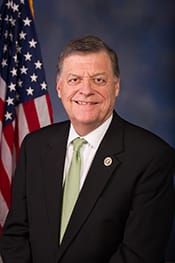
House
House Committee on Appropriations
Chair: Cole (R-OK)
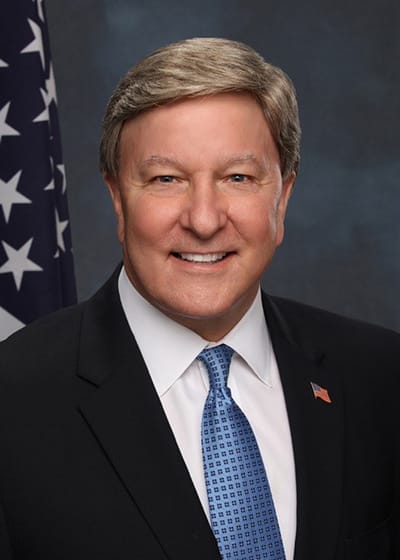
House
House Committee on Armed Services
Chair: Rogers (R-AL)

House
House Committee on Foreign Affairs
Chair: Mast (R-FL)
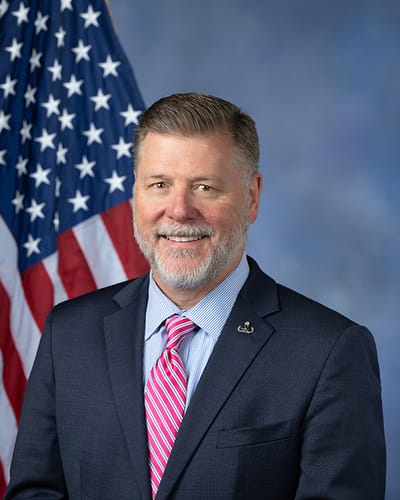
House
House Permanent Select Committee on Intelligence
Chair: Crawford (R-AR)

Senate
Senate Committee on Appropriations
Chair: Collins (R-ME)
Senate
Senate Committee on Armed Services
Chair: Wicker (R-MS)
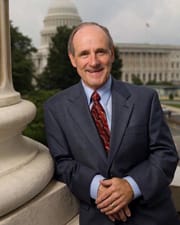
Senate
Senate Committee on Foreign Relations
Chair: Risch (R-ID)

Senate
Senate Select Committee on Intelligence
Chair: Cotton (R-AR)
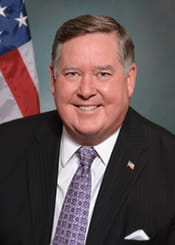
House · Subcommittee
Defense
Chair: Calvert (R-CA)
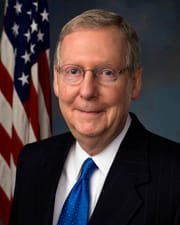
Senate · Subcommittee
Department of Defense
Chair: McConnell (R-KY)
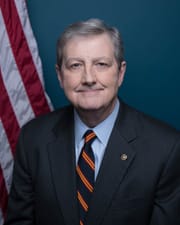
Senate · Subcommittee
Energy and Water Development
Chair: Kennedy (R-LA)

House · Subcommittee
Energy and Water Development and Related Agencies
Chair: Fleischmann (R-TN)
Disclosed Member trades · 11 Members
Members of Congress who have traded Lockheed Martin Corporation
20 disclosed transactions in LMT by 11 Members of Congress. 5 Members sit on a defense-jurisdiction committee — flagged inline below. Click any row to expand transaction detail. Source: U.S. House Periodic Transaction Reports.
Methodology note
Conflict-of-interest flagging is editorial. A disclosed trade is marked "Direct conflict" when the Member sits on a committee with significant jurisdiction over this recipient's sector (Armed Services, Appropriations Defense, Intel, Foreign Affairs/Relations for defense primes). Leadership roles (Chair, Ranking Member, Vice-Chair) receive more prominent treatment than ordinary committee membership. The label does not imply legal violation — Members are permitted to hold and trade individual securities under current law, including via managed accounts. Trades shown are disclosed PTR filings; the conflict assessment is our analytical lens on them.
Source: disclosures-clerk.house.gov, ingested via npm run ingest:house-ptrs
Related entities
Subsidiaries, parents, partners
Subsidiary (separately ranked #13)
Subsidiary (helicopters)
Co-operator (DOE M&O contract)
What's worth knowing
Lockheed's contract-to-lobby ratio of 4,100× is the highest among top defense primes. Its Senate Lobbying Disclosure filings explicitly name 'defense appropriations' as a lobbying target every quarter. The F-35 program has faced repeated GAO criticism over cost overruns ($1.7 trillion lifetime program cost, well above original estimates) and schedule slippage — yet Congress has consistently funded the program at or above requested levels.
Sus findings mentioning this recipient
Recipient profiles are hand-curated using public sources including USAspending.gov historical data, U.S. Senate Lobbying Disclosure Act filings, SEC filings (for publicly traded companies), and the bill texts we cover. FY26 figures marked "illustrative" are estimates based on prior-year procurement patterns and will be updated as USAspending obligations finalize. Findings describe public-record patterns. They are not allegations of wrongdoing.